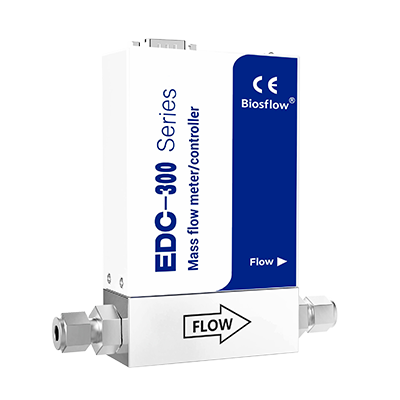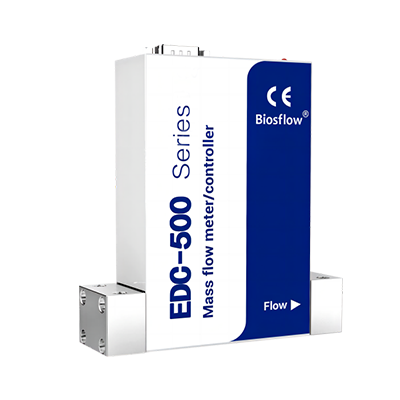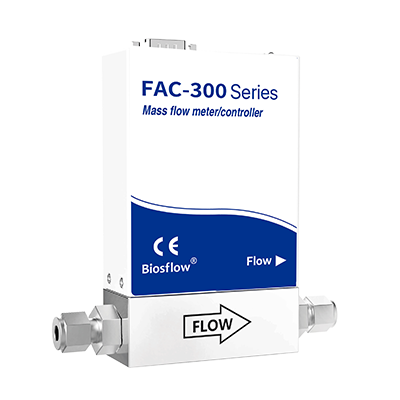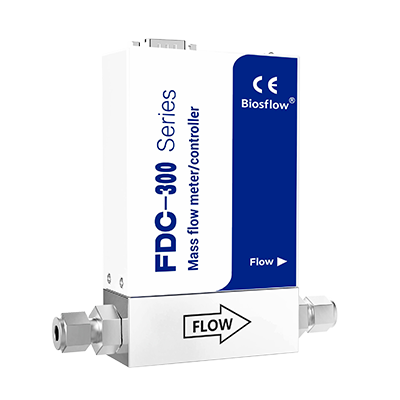
A methane mass flow controller is a specialized instrument that precisely measures and controls methane (CH₄) gas mass flow. Methane is a colorless, odorless, flammable, and explosive clean combustible gas; moreover, it is the primary component of natural gas and the simplest hydrocarbon. Therefore, methane mass flow control is essential for safety, efficiency, and environmental compliance across industrial, research, and energy applications.
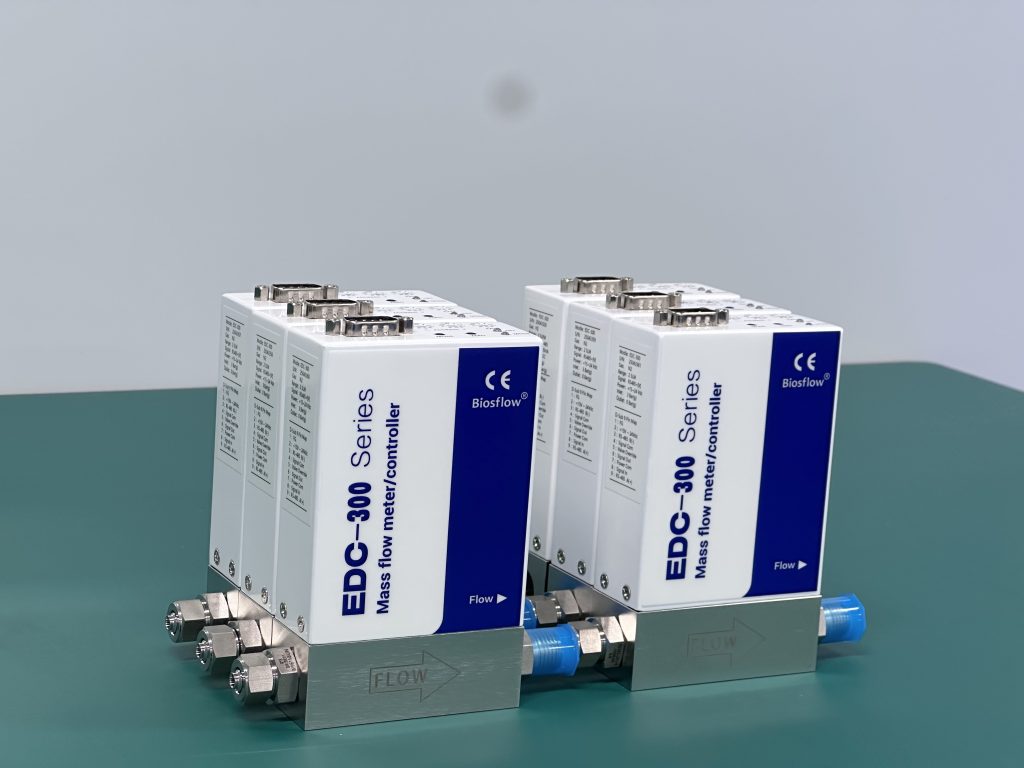
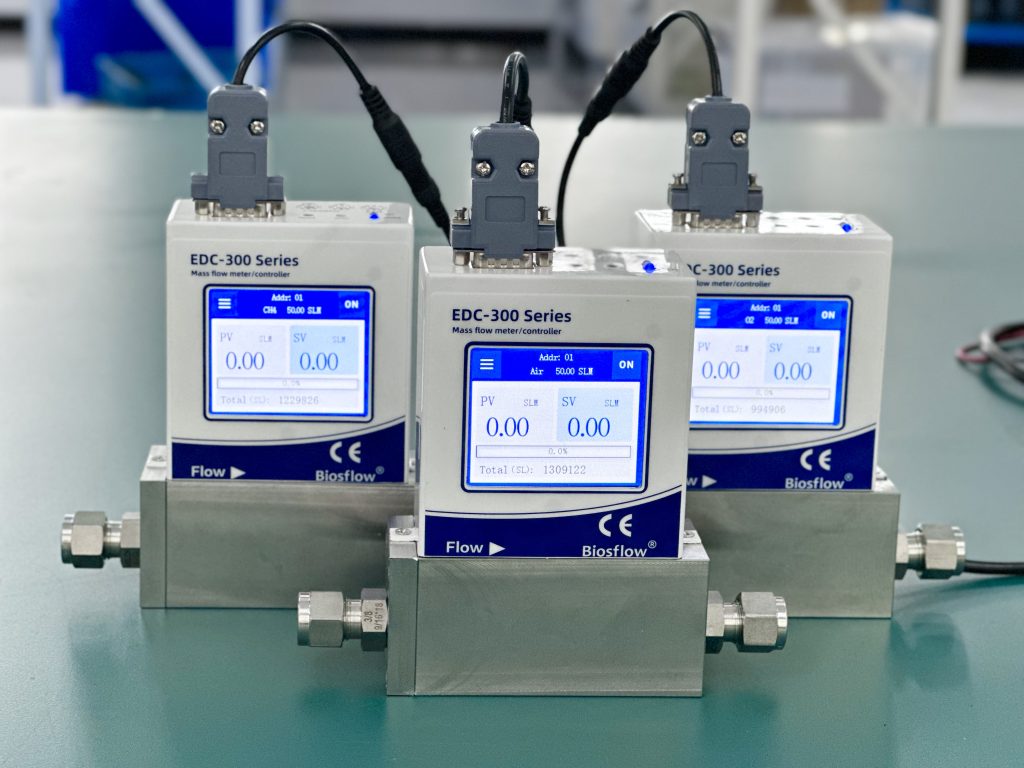
Why choose a gas mass flow controller?
Traditional volumetric flow meters are easily affected by temperature and pressure variations. In contrast, a methane mass flow controller measures and controls the gas mass flow directly, remaining largely unaffected by changing process conditions. Key advantages include:
- Direct mass flow measurement and control for stable accuracy
- Fast response and high control precision
- Wide turndown ratio, allowing one device to handle both micro and high flow rates
Mainstream Technologies
This device uses capillary thermal conduction. As massflow controller passes through a heated capillary tube, it removes heat, creating a temperature difference between upstream and downstream sensors. The system measures this difference to calculate MFC gas flow accurately, making it ideal for low-flow, high-precision applications.
Using Poiseuille’s law, gas passes through a laminar flow element to create laminar flow. The massflow controller measures the pressure drop across this element and combines it with absolute temperature and pressure data to convert volumetric flow into standard-condition mass flow, e.g., sccm mass flow or slm. This design therefore supports a wider flow-rate range.
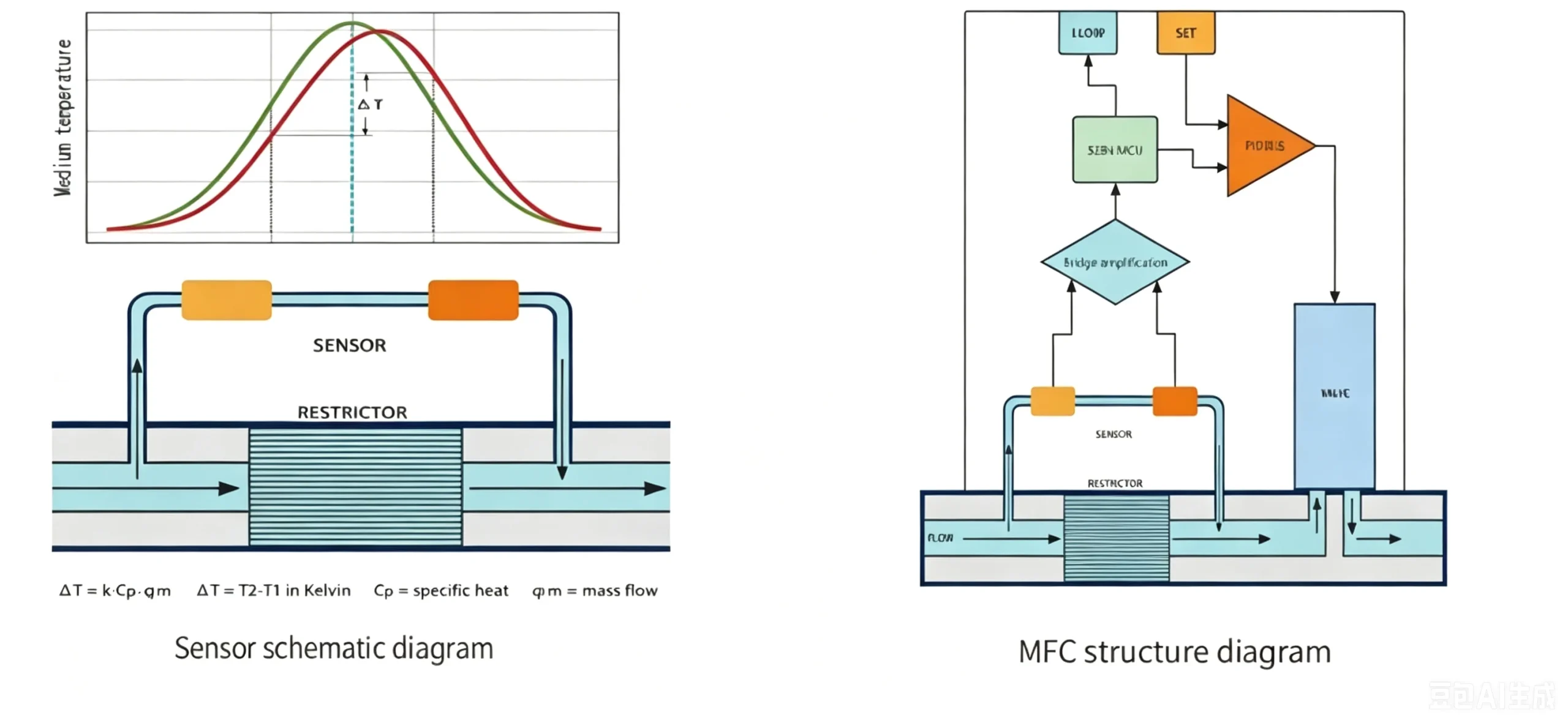
Generally, these technologies offer ±0.8% to ±1.0% full-scale accuracy, ±0.2% repeatability, 0.8 s response, and up to 100:1 turndown. For example, a methane mass flow controller can precisely regulate trace methane in low-concentration calibration gases or deliver stable high flows for combustion experiments, and responds to setpoint changes in milliseconds.
Key Application Areas
Oil & Gas Industry
Methane is the primary component of natural gas; therefore, it requires precise mass flow control in petroleum plants, gas processing stations, and transmission pipelines. In addition, in these applications, even sccm mass flow deviations can affect combustion efficiency, product quality, and process stability. Therefore, an accurate massflow controller is essential not only for process efficiency but also for operational safety and regulatory compliance, especially when operators measure, mix, or transfer methane under demanding conditions.
Massflow controllers are also paired with gas chromatographs for composition analysis, helping ensure measurement accuracy. By providing stable and repeatable gas flows, they support reliable analysis of heating value, impurities, and component concentrations. This is critical for custody transfer, quality verification, and emissions monitoring, where operators need precise data to meet contractual and environmental requirements.
Biogas and Bioenergy
Ideal for biogas plants and landfill gas treatment systems, where methane is often mixed with CO₂ and other components. Precise massflow control is essential for stable operation, efficient methane recovery, and downstream purification. The controller ensures reliable regulation during recovery and purification processes, helping improve efficiency and support emission reduction.
In laboratories, the same controller is used to mix methane and CO₂ to simulate biogas with different compositions. This enables repeatable combustion testing, purification studies, and catalyst evaluation. Whether in industrial biogas systems or lab-scale research, it provides accurate and consistent massflow control for emission reduction, purification, and combustion testing.
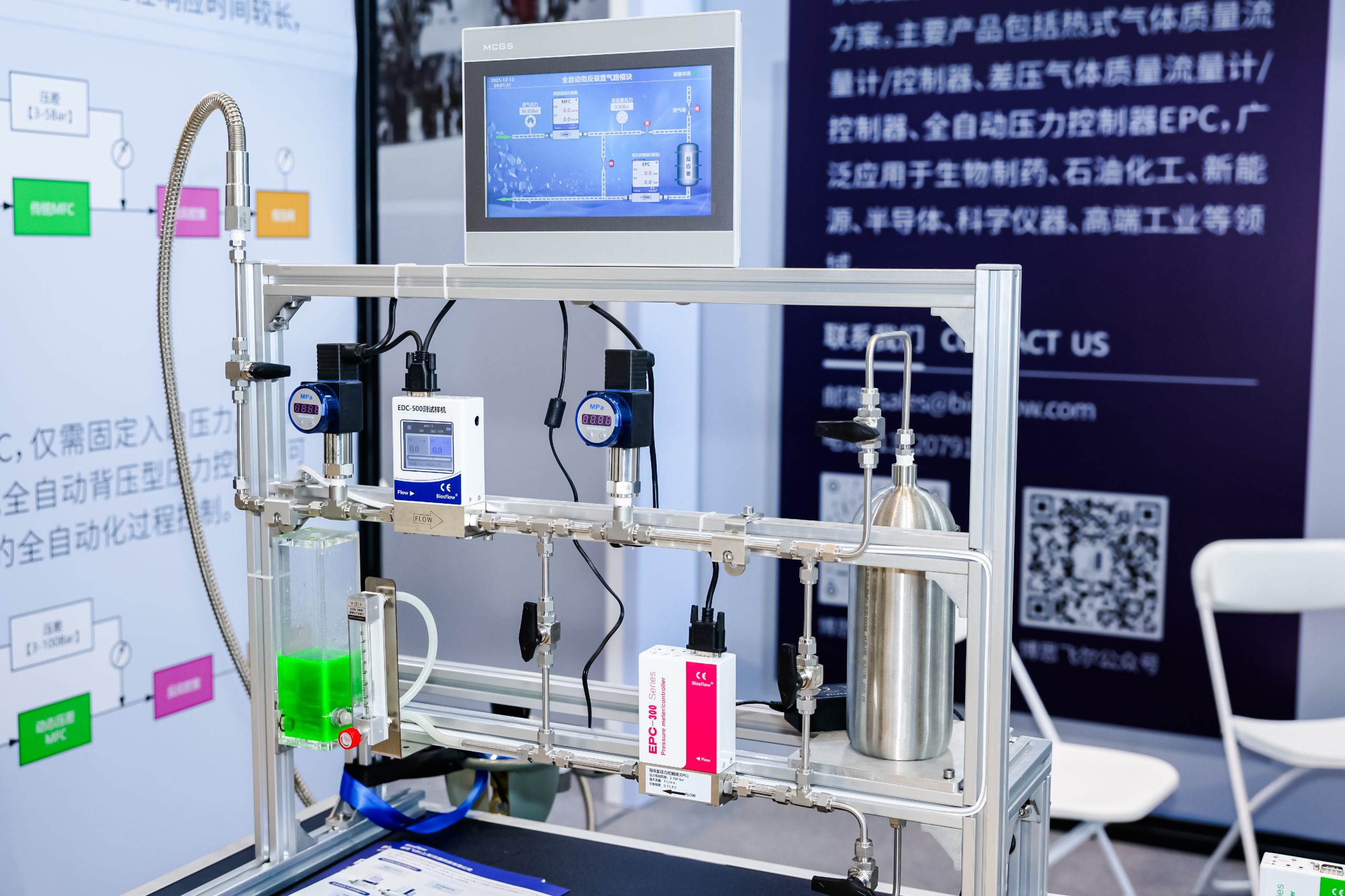
Universities and Research Institutes
In clean combustion experiments, real-time flow feedback allows researchers to continuously monitor and adjust the actual fuel-to-oxidizer ratio relative to the theoretical stoichiometric ratio. Since practical combustion often deviates from ideal conditions due to pressure, temperature, gas purity, and dynamic system response, this feedback helps quantify and correct those deviations quickly. As a result, combustion can be kept closer to the desired condition, improving stability, efficiency, and experimental repeatability.
This capability is especially valuable. It helps researchers study low-carbon fuels. These fuels include hydrogen, methane, biogas, ammonia, and blended fuels. Their flame behavior varies strongly. Their emissions also vary strongly. Both depend on the equivalence ratio. Researchers can maintain precise control. They keep it near the target stoichiometric condition. This helps reduce unburned hydrocarbons. It helps reduce CO. It helps reduce NOx emissions. Researchers can achieve cleaner combustion. They can also achieve more consistent combustion. Ultimately, real-time flow feedback not only supports more accurate combustion control but also enables more reliable scale-up from laboratory tests to industrial applications.
Environmental Monitoring and Calibration
In practice, methane analyzers require calibration with standard gases of varying concentrations. Therefore, a methane mass flow controller dynamically blends high-concentration methane calibration gas with a zero gas, such as nitrogen or pure air, in exact proportions. As a result, it generates the target methane concentration. In addition, this approach makes it possible to produce multiple calibration points on demand. Moreover, it avoids relying on a large inventory of premixed cylinders. Consequently, it improves flexibility and reduces gas storage and logistics costs.
By precisely controlling each gas stream, the massflow controller ensures stable and repeatable dilution ratios, even at low ppm levels. This is especially valuable for environmental monitoring, biogas, natural gas, and emissions testing, where accurate methane measurement depends on reliable calibration. It also supports automation and fast switching between concentrations, helping laboratories and field instruments maintain accuracy and consistency over time.
Selection Considerations
We offer a range of methane mass flow controller models covering flow rates from 0 to 1500 SLM. The body features 316L stainless steel construction and offers sealing options including Buna, Viton, or Kalrez to meet methane compatibility requirements. Communication interfaces such as RS-485, 4-20 mA, and 0-5 V support easy integration into automated systems for remote monitoring and data logging.
For detailed technical specifications or a quotation, please contact our sales manager Alexa(Alexa@biosflows.com/WhatsApp+86 15138465679).
Contact Us
Related Products