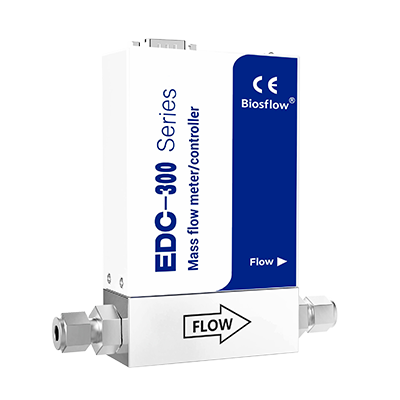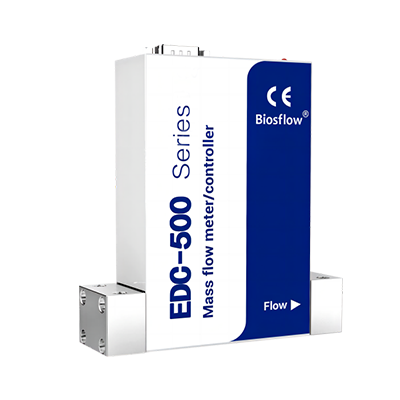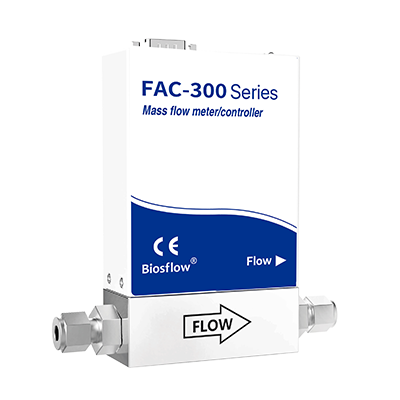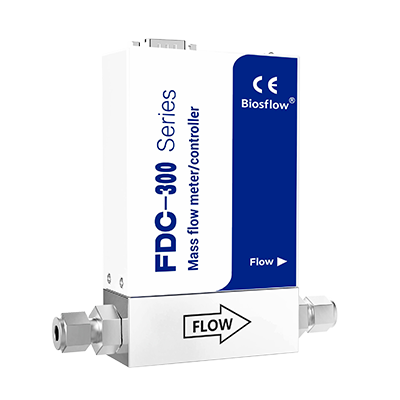
Version: V1.0
Applicable to: Official Website FAQ / Selection Support / Pre-sales and After-sales Support
Note: Specific parameters, ranges, accuracy, interfaces, and certifications are subject to the product datasheet and contract.
I. Basic Concepts
Q1: What is an MFC?
A: MFC stands for Mass Flow Controller, and it not only precisely measures the mass flow rate of gases but also controls it according to the setpoint. Moreover, it commonly uses units such as sccm, slm, mln/min, and ln/min, and it typically consists of a flow sensor, a control valve, and a PID control circuit.
Q2: What is the difference between an MFC and an MFM?
A: MFM stands for Mass Flow Meter, which only measures flow and does not control it. An MFC adds a control valve and closed-loop control to an MFM, allowing it to automatically adjust flow according to the setpoint.
Q3: What is the difference between an MFC and a rotameter or variable-area flow meter?
A: Rotameters and variable-area flow meters usually measure volumetric flow, and pressure and temperature significantly affect them. MFCs measure mass flow or standard flow and offer higher accuracy, repeatability, and automation, making them suitable for precision control.
Q4: What are the common working principles of MFCs?
A: Common principles include thermal, Coriolis, and differential pressure types. For example, engineers most commonly use thermal MFCs for small and medium gas flow control, whereas Coriolis MFCs are suitable for high-flow, high-pressure, or high-accuracy applications; however, Coriolis MFCs are usually larger and have a higher pressure drop. In addition, differential-pressure MFCs measure flow by detecting the pressure difference across a laminar element, and consequently, they usually require temperature and pressure compensation.
Q5: What is the difference between mass flow and volumetric flow?
A: Mass flow depends on gas density, and engineers commonly express it in units such as g/min or kg/h, while temperature and pressure affect volumetric flow. MFCs typically use standard volumetric units such as sccm and slm for flow calibration. Under standard conditions, these units directly relate to mass flow and help reduce errors caused by environmental changes.
Q6: What are the standard conditions for sccm and slm?
A: People generally use sccm and slm to describe flow under standard conditions, and they commonly define those conditions as either 0°C and 101.325 kPa or 20°C and 101.325 kPa. However, our products use 20°C and 1 atm as the standard conditions, so we define and calibrate customer flow accordingly.
Q7: Can an MFC control liquids?
A: Generally no. MFCs are used for gases. Liquid flow control usually requires an LFC or a liquid mass flow meter.
Q8: Can an MFC be used in a vacuum system?
A: Yes, but there must be sufficient working pressure differential across the MFC valve. The vacuum-side pressure, inlet pressure, and differential pressure all affect control performance.
Q9: Can an MFC be used at high pressure?
A: Yes, but you need a high-pressure model. Standard MFCs have limited pressure resistance. For high-pressure applications, you must confirm not only the maximum pressure but also the valve structure, sealing materials, and connection rating. Our maximum pressure can reach up to 42 MPa.
Q10: What gases can an MFC control?
A: Our MFCs can control common gases such as N₂, O₂, Ar, H₂, He, CO₂, CH₄, and Air. However, for corrosive, toxic, flammable, or easily condensable gases, you must use special materials, sealing, and certifications, so please confirm the gas type and operating conditions before selection.
Contact Us
Related Products